Posts tagged Cthulhu

Dan Gildark’s CTHULHU Is The Best Lovecraftian Film You Didn’t Watch…
012 years ago
by Scott R Jones
in Reviews
… and Here’s Why You Should Fix That
 CTHULHU (2008)
directed by Dan Gildark
written by Grant Cogswell, Dan Gildark, H. P. Lovecraft
starring Jason Cottle, Tori Spelling
Film efforts based on the fiction of H. P. Lovecraft most often fall into two categories: the loving yet slavish adaptations of specific stories (the excellent silent treatment of The Call of Cthulhu by the HPL Historical Society is a prime example) or the campy “(loosely) based on” goodness of Stuart Gordon’s decades of work. (For one instance, Gordon’s Dagon isn’t the story Dagon; it’s The Shadow Over Innsmouth, Spanish-style). Very rarely does a film come along that explores new ground, or attempts to frame the Lovecraftian thematic material in interesting ways from outside the accepted canon.
2008 saw the North American release of director Dan Gildark’s CTHULHU, a film that was plagued by negativity from a large part of the Lovecraftian fan community long before it graced a screen, a negativity that followed it into its general release. And that’s a shame, because CTHULHU is a unique and much-needed entry into a genre (and let’s be honest, Lovecraft is a genre, now more than ever) that over-values campy fun and a kind of eldritch hipsterism in its films over serious examinations of the Old Gentleman’s themes.
Resistance to the film takes a few forms. Gripes have included the fact that CTHULHU is not, in fact, a re-telling of The Call of Cthulhu, drawing instead from The Shadow Over Innsmouth for its source material; and given that, the setting for the movie’s Innsmouth stand-in (Astoria, OR) is in the Pacific Northwest, and not hoary old New England (oh, perish the thought); that Tori Spelling is in it for a couple of scenes; and that (and this last is by no means the least of the complaints) the main character, Russell Marsh, played with great empathy by actor Jason Cottle (Law & Order, The Haunting of Hell House), is a gay man. Even relatively positive reviews for CTHULHU can’t seem to shake off the lingering homophobia that leads to the use of disparaging terms like “butt buddy”.

Jason Cottle as "Russell Marsh" -- he's got the Look
Well, shake it off, Lovecraftians (once, twice, three times and you’re playing with it, mind), because today we’re going deep into CTHULHU, and why it’s one of the best Mythos-inspired movies you probably didn’t watch the first time round (for reasons) and why you should rectify that soon-ish.
First off, the technical stuff. CTHULHU can very rightfully boast about its sound and music design, which is minimal, tone-perfect, and creepy. Same goes for lighting, photography, location and set design: there are some breathtaking shots in this film. There is a single-shot car accident within the first 15 minutes that deserves serious kudos; a flash-cut stumble through black underground passages that’s particularly terrifying;

"I'm in your passages, subverting your ideas about what it means to be human."
dream sequences that pulse with nightmarish power and the kind of singular imagery one expects from German art haus films; and an excellent tracking shot over at least a hundred extras (members of the PNW surfing community as Deep Ones) slowly exiting the boiling tide that puts an ominous cap on the narrative. CTHULHU was shot digitally, there is a marine-layer of blue and dim, washed-out grey light that rolls over everything in the film like a bank of cold fog, marking it as a very West Coast film.
Now, if you’re into weird entertainment, and you don’t know about the films of David Lynch, then I don’t know what to say to you. Honestly, I’d think you were being a little disingenuous. Well, Gildark & Co. know their Lynch, and CTHULHU needs to be viewed through a Lynchian filter for its real beauty to shine through. Is the acting of every performer (other than Cottle) strange, wooden, and forced? Oh yes. Yes, and consistently so, which I believe is a deliberate choice, recalling the twisty mythic resonance of Twin Peaks. From the one-note leader of the Esoteric Order of Dagon…
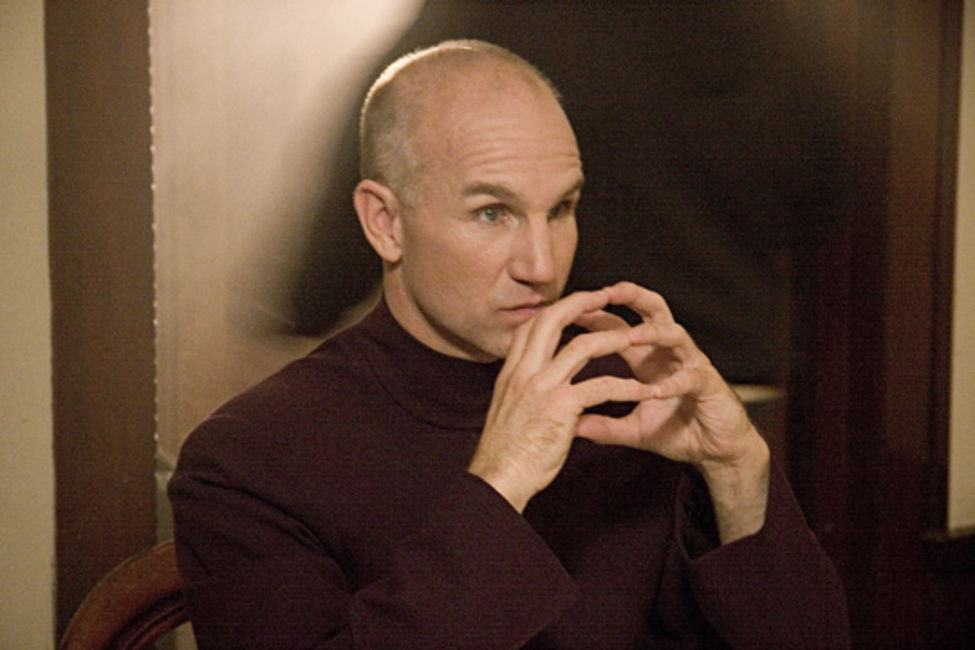
"I'm plotting. This is my plotting face. First I do this with my hands, and then I stare off into the middle distance."
to the vitriol-spewing sheriff robotically chewing up the scenery with completely out-of-left-field quotes from Yeat’s The Second Coming; from the bland-as-toast gay love interest to the over-the-top come-hitherness of Ms Spelling’s tadpole-babymama in her ridiculous short-shorts, these are characters that are meant to be painted with broad strokes. Broad characters, stilted wooden dialogue, unlikely motivations, all these help to colour the narrative in sickly, disorienting hues, a narrative set in the final moments before the return of the Great Old Ones: these are end times (arguably, the End Times), the radio and television broadcasts that chatter in behind the scenes reveal an earth that is giving up the ghost, giving up all illusion of ever having been a rational place. There is no place in the world left for sensible human interaction. There are no sensible humans left.
And as far as the dialogue is concerned, well, please recall that Lovecraft couldn’t have written a normal sounding conversation between two humans if his life had depended on it. When Cottle’s Marsh sits with his insane great aunt in an attempt to dig information from her, or interacts awkwardly with the girl from the liquor store, or hangs out on a dock with the film’s raving Zadok Allen stand-in, it works, somehow. Especially when you close your eyes to listen. It’s Lovecraft dialogue, updated to the 21st Century.
That’s the key, I believe, to the film: a (symbolic) closing of the eyes. (Don’t actually close your eyes; the photography, remember? It’s very good, gorgeous, even.) There are many dream sequences throughout its 100 minute length, but the whole thing is a dream. CTHULHU has the same languid urgency of a fever dream, profoundly unsettling singular images presented without commentary, scattershot logic and senseless narrative leaps. Leering faces. Headlong tears down darkened streets, claustrophobic corners, vast unfeeling land-and-seascapes. As Marsh’s dreams begin to bleed into his reality, the entire narrative opens up from a simple return-of-the-prodigal-son story into something far stranger.

"Ì like good wine, fine books, and long walks on the beach to check on the wretched sacrifices in the giant crate before the tide comes up..."
Alright, though. Let me address that simple story first. Because of course, it’s not so simple. Or rather, it is, but a single aspect of the story tends to overshadow the film (and the minds of its largely hetero critics) as a whole, namely the sexual orientation of the character of Russell Marsh. Yup, he’s gay. Nope, Lovecraft never wrote a gay character, or even came close to writing a character with any kind of sexuality at all. The complaints about CTHULHU tread this same ground over and over: “is the gay thing really necessary?” goes the refrain. “It’s exploitative.” And so on. And it might be, were the film a vehicle for some kind of homosexual agenda. But it’s not: what Marsh is (a son, a brother, a prodigal, a professor, and many other things before and beyond his orientation) serves the story, and not the other way around.
And really, of all the Lovecraft stories where a gay protagonist would work, The Shadow Over Innsmouth is top of the list! Shadow… is all about the fear of breeding, of monstrous genetic heritage, of sexual assault and unwanted miscegenation, mutation, body horror. Would Ms Spelling’s creepy drugging and rape of Marsh be less horrific if his character was a straight man? I submit that it would.
(An aside: the choice of Ms Spelling in the role of “Susan” here is, honestly, inspired. In the film we are presented with a community that has fully embraced and incorporated their Deep One heritage: like the rapidly decaying world outside its borders, it has been normalized. Horror is an everyday thing. Everyone is in on it, there are no detractors from the EoD dogma, and more importantly, no overt monsterism. Susan and her psychotic hubby may be using Marsh to spawn monsters, but they are not monstrous looking.

Russell. Russell, you are safer with the bear. Seriously.
And so Spelling is a great choice for the role: conventionally attractive, and yet it must be admitted that she has the wide face and slightly ophthalmic eyes that characterize the Innsmouth Look. Off-putting because of its familiarity. No robes and mutations here, these are cultists who pass.)
Anyway, back to Marsh. He is literally attacked by breeders, with (in the context of the story) all that the word implies. The results are horrific, nauseating. Gildark doesn’t show the viewer what’s in that clawfoot tub in the final moments of the film, and he doesn’t have to. That’s good scary filmmaking, right there, and the repugnance and horror of the situation is only made deeper and richer with a gay lead. It fits. It works. It’s not a distraction, or an aberration; it’s decent, thought-out narrative.
Nor is that scene in the bathroom the only time such skill is on display. There are choice little moments throughout CTHULHU that allow the film to stand apart from the pack. A hallucinatory encounter with a strange gemstone in the attic of a fishing shack; the apparent (but never fully explained) return of a dead ancestor; a nice shout-out to Carpenter’s In the Mouth of Madness during a jail escape scene; and an encounter with a bad piece of CGI on a darkened highway that, again, works despite itself, because it is so brief, so out-of-context, so never-touched-on-again.

"What is that thing? Never mind, it's gone. NEVER TO BE SEEN AGAIN."
Weirdness piles on to weirdness, and the cumulative effect is very interesting indeed. For myself, I don’t need every little tic and odd thing classified and pinned to a board in order to feel comfortable with a film; the more strange errata are present, the more deranged (and happy) I am. Film should derange, it should unsettle, and horror films especially so. If Gildark was going for the nightmarish vibe of a descent into madness, then he succeeded.
There is however one moment, to my mind, where the whole effort trips over itself, and interestingly, it is a moment that could be considered as a bit of fan-service. About halfway through the film, Marsh finds himself in an empty house with a dead-eyed little boy who he suspects is the missing child he’s been looking for. The kid’s been waiting, waiting, watching snow on an old TV like every dead-eyed kid since Poltergeist has, and when he’s asked who he’s been waiting for, Bustah Brown breaks the fourth wall in a close-up shot and intones “CTHULHU”, and there’s a musical sting as it happens, a deep bass tone. It’s forced. It’s weird. There’s no follow-up, only an immediate scene change. Gildark, in an interview, has stated that “Cthulhu” for him, as a word, embodies forces that operate outside our perception. Which is fine on the surface of it, but in a film where so much is left unsaid, implied, hinted at, and obscured (there is no explicit mention of the Deep Ones, for instance, at least not by name, and the Esoteric Order of Dagon is present, but actually pretty goddamn esoteric, by all accounts) the actual mention of Cthulhu (less as the Great Old One and more as the title and theme of the film) by a moppet in short pants feels contrived. If anything, that one scene came across more as “Lovecraftian fan exploitation” than all the supposed gay exploitation. It could easily be removed without doing any harm.
So, if you missed this one the first time around, or went in expecting a standard Call of Cthulhu RPG scenario translated to film and came away disappointed as a result, I encourage you to shift your frame of viewing reference and give Dan Gildark’s CTHULHU another try. It’s not a perfect film, but then, films that get better with repeat viewings rarely are.
* * * * *
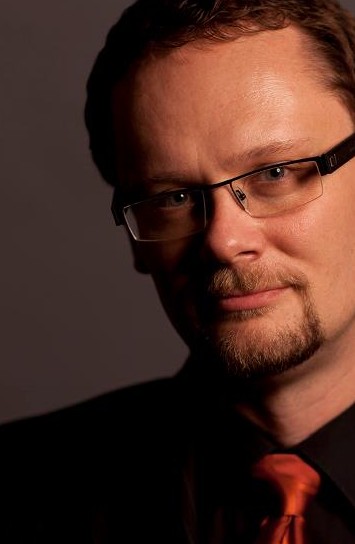 Scott R Jones is the author of the short story collections Soft from All the Blood and The Ecdysiasts, as well as the non-fiction When the Stars Are Right: Towards An Authentic R’lyehian Spirituality. His poetry and prose have appeared in Innsmouth Magazine, Cthulhu Haiku II, Broken City Mag, and upcoming in Andromeda Spaceways Inflight Magazine.

Smut and Spirituality for Spring!
012 years ago
A double-header Newscluster for you this morning, Migraineers! Some smut and spirituality to start off your Spring!
CONQUEROR WOMB goes FREE on Kindle for a Limited Time…
 First off: the Spring has sprung! the grass is riz! And if you’re wondering where the Black Goat of the Woods is, well babies, She is over in the Amazon Kindle store where she’s been since we put her there, gathering followers and great reviews. And in celebration of the Vernal Equinox, she’s making herself all free and easy for your reading pleasure and beyond! That’s right. CONQUEROR WOMB: Lusty Tales of Shub-Niggurath is going on a bit of a gratis orgy. Pick up your Kindle edition of CW (with stories by Wilum Pugmire, Molly Tanzer, Christopher Slatsky, Kenton Hall, Christine Morgan, Jacqueline Sweet, Brian M Sammons, and others) FREE TODAY THROUGH SUNDAY MARCH 23rd.
Oh, and a quick note about the cover to CW… you may recall our censorship troubles with the Big A regarding the awesome cover art by Scottish comics wunderkind Garry Mac (“Too many nursing titties!” they said. “Nine is too many!” they whined.) Well, we’ve managed a work-around on that, too: you get the un-censored cover graphic in the body of the text now. Everybody happy! (We hope.)
 And don’t forget to send your Amazon email receipt to bookstore@martianmigrainepress.com to get your Conqueror Womb bonus e-book, DARK/YOUNG, with a story each by editor Justine Geoffrey (BLACKSTONE Erotica) and author Jess Gulbranson (Antipaladin Blues)
WHEN THE STARS ARE RIGHT Official Launch
 The pre-order period for getting your early paperback copy of Scott R Jones’ game-changing book, When The Stars Are Right: Towards An Authentic R’lyehian Spirituality, is now over. Which means we’re launching the Damned Thing into the world officially. You can order your physical copy or your EPUB and PDF e-versions HERE, or, if you want to start digesting Jones’ dark wisdom immediately on your Kindle or Kindle-enabled device, you can head on over to the Kindle store HERE to have it delivered via Amazon’s WhisperNet in literally seconds.
We’re hoping you’ll want to talk about When The Stars Are Right once you’ve been infecte–… we mean, once you’ve enjoyed the book, so, a reminder about hashtags for the social media: we’re trying to get #KeepinItRlyeh (or, alternatively, #KeepingItRlyeh with a G in there, for you grammar Nazis), #Cthulhusattva, and #BlackGnosis trending. Use those while gibbering about your reading experience on Facebook or Twitter, or when dropping some review-action on the book, and we’ll notice! We are all about noticing things like that.
Martian Migraine Press: The Best Kind of Headache
What They’re Saying About ‘When The Stars Are Right’
012 years ago
Ross E. Lockhart, editor of The Book of Cthulhu
“In the decades since H. P. Lovecraft’s untimely death, countless objects, films, novels, stories, and poems have expanded upon The Old Man of Providence’s oeuvre and its associated pantheon of alien god-things. Among those secondary creations, alongside such nameless horrors as plush Cthulhus and stranger things, have been numerous false Necronomicons, promising arcane wisdom and occult power, but too-often turning out to be a gamut of unpronounceable gobbledygook and a handful of incomprehensible rituals borrowing heavily from Buckland, Crowley, and Spare.
No longer. Canadian author, editor, and poet Scott R. Jones eschews such fannish faux-cult nonsense by approaching Old Grandpa Theobald’s life’s work and literary legacy as a true spiritual seeker, and, as a result, uncovers real spiritual truths. This is no Simon Necronomicon, no coy cash-in; instead, the book you hold in your hands is a sort of Cosmic Horror How to Win Friends and Influence Cultists, filled with potentially life-changing wisdom, provocative observation, and beautiful madness. When the Stars Are Right is the first real self-help book for the weird fiction crowd.”

Richard Gavin, author of At Fear’s Altar and The Darkly Splendid Realm
“With this book Scott R. Jones manages to transcend the mire of pseudo-Necronomicons and the pop Cthulhu cottage industry. When The Stars Are Right is a stirring examination of the genuine Darkness that churns not only in the mythos of H.P. Lovecraft but in the universe at large.”

Leeman Kessler, AskLovecraft.com
“Lovecraft has endured a great deal of violence to his name, his reputation, and his legacy over the years, not all of it undeserved, but the particular violence that Mr. Jones has wrought upon him is a thing to behold. One could easily imagine Mads Mikkelsen portraying this level of cool, methodical, and above all stylish act of brutality all while beautiful music plays in the background, enticing us to enjoy but horrifying us at the same time and leaving us confused and alone with our own feelings.
When The Stars Are Right is not a book; it’s a crime scene. We are invited to watch the crime take place and are made accomplices in the act, following Mr. Jones as he not only carries out this crime but tells how he will accomplish it and then serves us up the cadaver in delicious morsels that we swallow with every turn of the page, knowing we should tell someone, anyone but not sure if they will even believe us.
For devotees of an atheist, Lovecraft’s followers can come across as dogmatic and unyielding as any Barnstomping Baptist and Mr. Jones delights in slitting the throats of every one of their sacred cows all while somehow remaining more true than should be considered a good thing. So read this book, safe in the knowledge that you will enjoy the journey into darkness, just know that it may not be the same you that comes out the other side nor, perhaps, should it be.”

Bryan Thao Worra, NEA Fellow in Literature, author of DEMONSTRA
“When The Stars Are Right constitutes an important contribution to Weird literature. At points profound, perverse, and personal, Jones provides a reading of the Mythos that reclaims the horror and cosmic strangeness, contradictions and all, framing them as a journey along a dreamer’s path, deep among infinitely inexpressible wonders. This book comes at a critical point in space and time as Lovecraft’s literary legacy expands globally. As one might expect, this work frequently dances on the edge of madness and genius. But it boldly contemplates the life-changing notions that chortled and skittered along the edges of Lovecraft’s best work. Highly recommended, but don’t expect any gates to close easily afterwards”

Luke R. J. Maynard
“The William Blake of Cosmic Horror … Jones is a thinking person’s spiritualist, and debunks the mindless-cultist stereotype once and for all by exploring R’lyehian spirituality here not through the repetitive rote chanting of a preacher, nor even through the mysteries and ambiguities of a vision-poet, but through the targeted and sensitive analysis of a theologian … [his] work here is, in essence, not to write the mysterious, inscrutable gospel of R’lyehian spirituality, but rather to write a functional theology … what it really means to draw one’s spirituality out of somebody else’s writing, and how that ought to be done, and what we must understand about it in order to do so. This is serious work; that he has done it at all suggests that we ought to take R’lyehian spirituality a little more seriously. That he has done it well demands it.” (full review here)

 If you’re Canadian (and congratulations if you are!) you can pre-order WTSAR HERE (15.99 + 3.50CAD shipping & handling)
 If you’re American (brave! free! delightfully weird!) you can pre-order WTSAR HERE (15.99 + 8.00CAD shipping & handling)
 If you live anywhere else on this bizarre spinning mudspeck, you can pre-order WTSAR HERE (15.99 + 16.00CAD shipping & handling)
Want your copy autographed by the author? Please indicate this in the SPECIAL INSTRUCTIONS section before completing your transaction.
When The Stars Are Right will be officially released for general purchase in both print and ebook formats on FRIDAY MARCH 21, and we will do our utmost to ensure that readers who pre-order the book early (say, within the first two weeks of March) receive their copies as close to the release date as possible.
Martian Migraine Press: the Best Kind of Headache